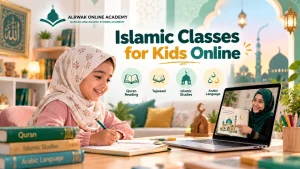
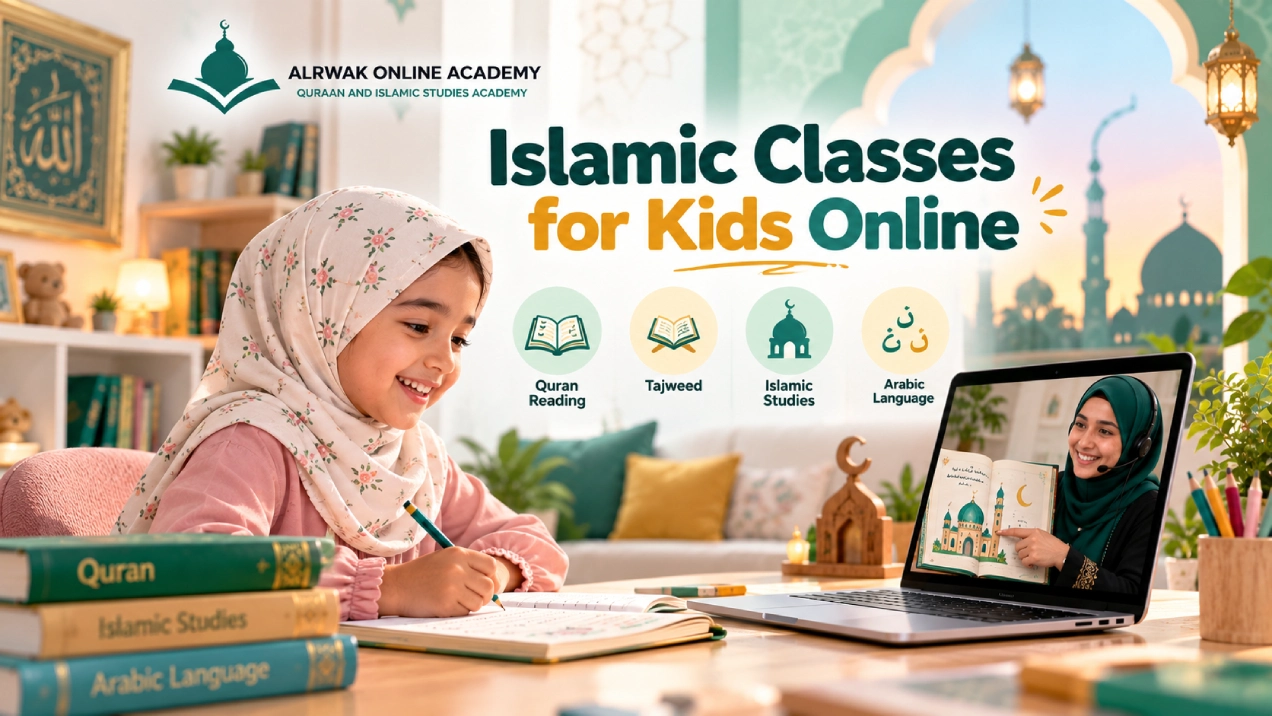
Alrwak Online Academy offers online Islamic education for children and adults, including Quran learning, Tajweed, Arabic language, and Islamic studies. Families can explore learning options that help children develop their Quran skills and build foundational knowledge of Islam through structured lessons.
Whether your child is beginning to learn about Islam, wants to improve Quran reading, or needs guidance with Arabic and Islamic studies, choosing an appropriate program can help make learning more organized and accessible.
In this guide, discover what children can learn in online Islamic classes, how to choose a suitable program, and how parents can support their child’s learning journey.
Online Islamic Classes for Kids at Alrwak Academy
Alrwak Online Academy provides online learning opportunities for children who want to study the Quran, Tajweed, Arabic, and Islamic studies. Lessons can be explored according to a child’s current knowledge, learning objectives, and educational needs.
Islamic education includes more than memorizing information. Children can gradually develop an understanding of Islamic teachings, learn about the life of Prophet Muhammad (peace be upon him), explore Islamic manners, and become more familiar with the Quran.
Depending on the course selected, Islamic learning may include:
- Foundational Islamic knowledge appropriate for children.
- Quran reading and recitation.
- Quran memorization and revision.
- Basic Tajweed rules and pronunciation.
- Arabic language learning.
- Stories from Islamic history and the lives of the prophets.
- Islamic manners and everyday values.
Parents can discuss their child’s age, previous learning experience, and goals with the academy to explore suitable courses.
What Can Children Learn in Online Islamic Classes?
Children learn about Islam in different ways depending on their age, background, and current knowledge. A suitable learning program introduces concepts gradually and gives children opportunities to ask questions and review what they have learned.
1. Quran Reading and Recitation
Learning to read the Quran is an important part of Islamic education for many families. Children who are beginners may start with Arabic letters, letter sounds, vowel marks, and basic reading skills.
As their reading develops, they can practise reading Quranic verses and improving their pronunciation with appropriate guidance.
Parents should choose lessons that match their child’s current reading ability rather than expecting every child to begin at the same level.
2. Quran Memorization
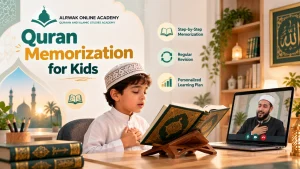
Quran memorization lessons help children work toward memorizing selected surahs and passages. A suitable learning routine balances new memorization with regular revision to help children retain what they have learned.
The amount assigned should reflect the child’s ability, available practice time, and previous memorization. Consistency and accurate recitation are more important than rushing through large portions of the Quran.
3. Tajweed and Correct Pronunciation
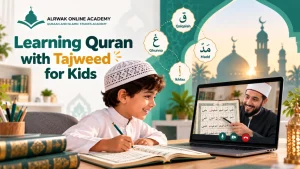
Tajweed teaches the rules and techniques used in correct Quran recitation. Children can gradually learn how Arabic letters are pronounced and how specific rules apply when reading Quranic text.
Depending on their level, lessons may introduce articulation points, elongation, and other foundational Tajweed rules. Guided practice allows children to apply what they learn while reciting.
4. Basic Islamic Knowledge
Islamic studies can introduce children to foundational concepts of their faith in an age-appropriate way. Lessons may cover basic beliefs, important Islamic practices, and general knowledge that helps children understand the religious concepts they encounter in everyday life.
The teacher should explain unfamiliar ideas clearly and encourage children to ask questions when they need further explanation.
5. Stories of the Prophets and the Seerah
Stories of the prophets and lessons from the life of Prophet Muhammad (peace be upon him) can help children become familiar with important events in Islamic history.
When taught appropriately, these stories can introduce themes such as patience, honesty, compassion, trust in Allah, and perseverance. Parents should look for lessons that present religious information accurately and explain the lessons in language children can understand.
6. Islamic Manners and Everyday Values
Children can learn about Islamic manners through practical examples related to family life, friendships, honesty, kindness, respect, and responsibility.
Connecting lessons with everyday situations can help children understand how Islamic values relate to their behavior and interactions with others.
7. Arabic Language Learning
Arabic lessons can support children who want to develop their reading, vocabulary, pronunciation, and language skills. For children studying the Quran, learning Arabic can also help them become more familiar with the language of the Quran.
The appropriate course depends on whether the child is a complete beginner, already recognizes Arabic letters, or has previous experience with the language.
Why Choose Islamic Classes for Kids Online?
Online Islamic education offers families an alternative to attending in-person classes. When the program suits the child’s needs, learning from home can make it easier to organize lessons around school and family responsibilities.
Convenient Learning from Home
Children can attend lessons using a computer, tablet, or smartphone without travelling to a physical classroom. Parents can prepare a comfortable learning space and help children get ready for each session.
Flexible Scheduling
Online lessons can make it easier for families to arrange classes around school, homework, and other activities. This can be particularly helpful for families living in different time zones or areas without convenient access to local Islamic education.
Before enrolling, confirm the available lesson times, session duration, and policies for rescheduling missed classes.
Learning According to the Child’s Level
Children may have different levels of Quran reading, Arabic knowledge, and familiarity with Islamic studies. A suitable learning plan considers these differences and introduces material at a manageable pace.
Opportunities for Questions and Discussion
Children may have questions about religious concepts, stories, or daily practices. A supportive teacher can explain ideas clearly and help children understand the lesson rather than simply memorize information.
Support for Different Learning Goals
Some families may prioritize Quran memorization, while others want to focus on reading, Tajweed, Arabic, or foundational Islamic knowledge. Exploring the available courses helps parents choose lessons that reflect their child’s current goals.
How to Choose the Right Online Islamic Classes for Your Child
Choosing an online Islamic education program involves more than comparing prices or lesson times. Parents should consider the teacher’s experience, the course content, the teaching approach, and the child’s comfort during lessons.
Look for Relevant Teaching Experience
Choose a teacher who understands the subject being taught and has an appropriate approach for children. Quran recitation, Tajweed, Arabic, and Islamic studies may require different teaching skills, so ask about the teacher’s experience with your child’s learning goals.
Review the Curriculum
Ask what your child will learn and how lessons are organized. A clear curriculum helps parents understand the subjects covered and whether the program is appropriate for their child’s age and current knowledge.
Consider the Teaching Style
Children often benefit from clear explanations, repetition, encouragement, and opportunities to participate. During an introductory session, observe whether the teacher communicates effectively and adjusts the lesson when the child needs help.
Ask About Progress Updates
Parents should understand how learning progress is assessed. Depending on the program, this may involve feedback on reading, memorization, pronunciation, or understanding of the material.
Check Scheduling and Practical Details
Confirm lesson duration, availability, payment terms, cancellation policies, and the technology needed to participate. Understanding these details in advance can help prevent confusion after enrollment.
Review Online Safety and Privacy
Parents should understand how lessons are conducted, how communication is managed, and what privacy practices the academy follows. Appropriate parental supervision and clear communication procedures are important when children learn online.
Online Islamic Classes for Different Age Groups
Children’s learning needs change as they grow. The right course should consider their age, attention span, existing knowledge, and ability to understand the subject.
| Learning Stage | Possible Learning Focus |
|---|---|
| Young beginners | Basic Islamic concepts, Arabic letters, simple Quran learning, and age-appropriate stories |
| Developing learners | Quran reading, introductory Tajweed, memorization, and foundational Islamic studies |
| More experienced learners | Further Quran study, revision, additional Tajweed rules, Arabic development, and broader Islamic knowledge |
These are general examples rather than fixed age-based requirements. A teacher should consider the child’s actual ability before recommending specific lessons.
How Parents Can Support Islamic Learning at Home
Parents can help children get more from online Islamic classes by creating a positive learning environment and encouraging them to practise what they learn.
- Create a regular routine: Set aside suitable times for lessons and revision.
- Provide a quiet learning space: Reduce distractions and prepare the device before the session begins.
- Encourage questions: Give children opportunities to discuss what they have learned.
- Connect lessons with everyday life: Use simple examples to help children understand Islamic manners and values.
- Support Quran practice: Follow the teacher’s recommendations for reading or revision between lessons.
- Celebrate effort: Encourage consistency and recognize improvements without comparing children with others.
- Communicate with the teacher: Ask for feedback and discuss any learning difficulties.
- Keep expectations realistic: Allow children to develop their knowledge gradually according to their age and ability.
A supportive environment can help children approach Islamic education with curiosity and confidence while keeping learning manageable alongside their other responsibilities.
At What Age Can Children Start Online Islamic Classes?
The appropriate starting age depends on the child’s readiness, attention span, and the type of lesson. Young children may benefit from simple explanations and short activities, while older children may be ready for more detailed Quran study and Islamic concepts.
Alrwak Online Academy accepts children starting at age five. Parents can discuss their child’s needs and previous learning experience with the academy to explore an appropriate starting point.
For younger learners, it is important to choose a teaching approach that suits their developmental stage and allows them to learn without unnecessary pressure.
How Much Do Online Islamic Classes for Kids Cost?
The cost of online Islamic classes varies according to the academy, teacher, lesson format, duration, number of sessions, and subjects included in the program.
Before choosing a course, parents should compare the complete learning experience rather than price alone.
| Factor | What to Ask |
|---|---|
| Lesson format | Are lessons individual or group-based? |
| Subjects | Which Quran, Arabic, and Islamic studies courses are included? |
| Lesson duration | How long is each session? |
| Schedule | How many sessions are included each week? |
| Learning support | What feedback or learning materials are provided? |
| Payment terms | What are the cancellation and rescheduling policies? |
Contact the academy to confirm its current fees, available packages, and payment terms before enrolling.
Islamic Classes for Kids Online at Alrwak Online Academy
If you are looking for Islamic classes for kids online, Alrwak Online Academy offers online learning options for children and adults who want to study the Quran, Tajweed, Arabic, and Islamic studies.
The academy’s learning options can help families explore different areas of Islamic education according to their children’s needs. Parents can discuss whether their child should focus on Quran reading, memorization, Tajweed, Arabic language, or foundational Islamic studies.
Alrwak Online Academy accepts children from age five. Families can ask about the available courses, teacher options, lesson schedules, and the most appropriate starting point for their child.
Before choosing a program, consider your child’s age, current knowledge, learning goals, and the amount of time available for regular practice. These details can help you discuss a suitable learning plan with the academy.
Explore Alrwak Online Academy to learn more about online Quran and Islamic education for children.
Frequently Asked Questions About Islamic Classes for Kids Online
What do children learn in online Islamic classes?
The subjects depend on the selected program. Islamic education may include foundational Islamic knowledge, Quran reading, memorization, Tajweed, Arabic, and lessons about Islamic history and manners. Parents should confirm the exact curriculum with the academy.
Can young children learn Islam online?
Yes. Online lessons can introduce children to age-appropriate Islamic concepts and Quran learning. The teaching style, lesson length, and content should match the child’s readiness and attention span.
At what age can my child join Alrwak Online Academy?
Alrwak Online Academy accepts children starting at age five. Parents can discuss their child’s current knowledge and learning needs with the academy before selecting a program.
Can my child study Quran and Islamic studies together?
Depending on the available courses and the child’s schedule, families may be able to explore more than one learning area. Ask the academy about the current course options and whether combining subjects would suit your child.
Are online Islamic classes suitable for children who do not speak Arabic?
The suitability depends on the course and the languages available for instruction. Parents should ask whether the teacher can explain lessons in a language their child understands and whether the program accommodates beginners.
How can I choose a good online Islamic teacher for my child?
Consider the teacher’s relevant knowledge, experience teaching children, communication style, curriculum, and ability to explain concepts clearly. Ask about progress feedback and use an introductory session, if available, to evaluate whether the teaching approach suits your child.
How often should children attend online Islamic classes?
The ideal schedule depends on the child’s age, goals, available time, and the selected program. Ask the academy to recommend a manageable schedule that leaves enough time for revision and other responsibilities.
How can parents track their child’s progress?
Ask the teacher how learning is assessed and what feedback is available. Depending on the subject, progress may involve improved Quran reading, more accurate recitation, memorization, or a better understanding of the material studied.
Can parents arrange a trial lesson before enrolling?
Trial lesson availability depends on the academy’s current policy. Contact Alrwak Online Academy to confirm whether a trial is available and how to arrange one.
Help Your Child Begin Their Islamic Learning Journey
Online Islamic classes can give children an accessible way to learn about their faith while developing Quran reading, memorization, Tajweed, Arabic, and foundational Islamic knowledge.
The right program should match the child’s age and learning level, provide clear instruction, and encourage steady progress without unnecessary pressure. Parents can support this process by establishing a positive routine and staying in contact with the teacher.
Visit Alrwak Online Academy to explore online Islamic learning options and discuss a suitable program for your child.